
There are over 3,900 known snake species on Earth, but only a fraction of them pose a genuine threat to human life. Yet that fraction is responsible for an estimated 100,000 deaths every year worldwide. So which snakes are truly the most dangerous? The answer depends on how you define “dangerous”: raw venom toxicity, aggression, proximity to humans, or sheer killing speed. This list considers all of the above.
This guide ranks the 10 most dangerous snakes in the world based on venom, aggression, and proximity to humans.
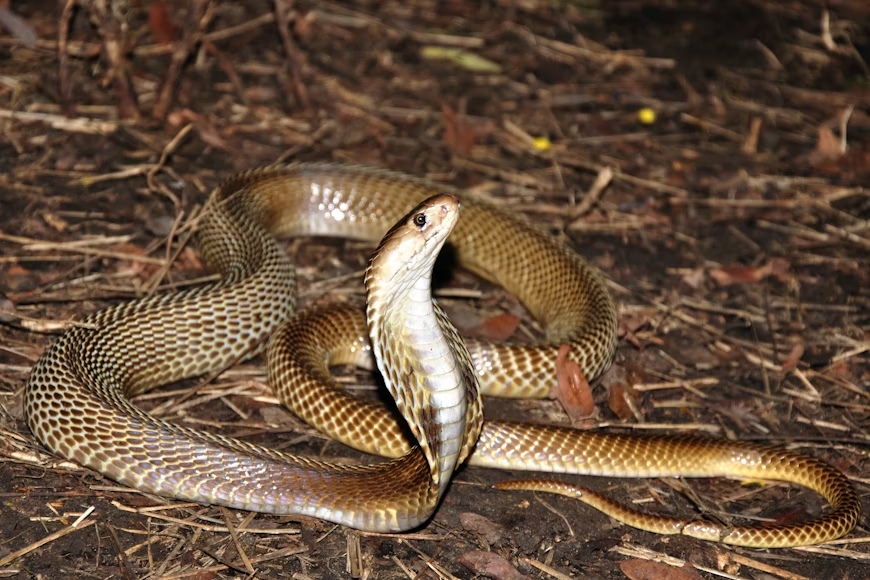
The 10 Most Dangerous Snakes in the World: How We Ranked Them
- King Cobra The Longest Venomous Snake Alive
The king cobra (Ophiophagus hannah) holds the record as the longest venomous snake in the world, reaching lengths of over 18 feet. What makes it particularly dangerous is not just its size; it’s the sheer volume of venom it delivers in a single bite.
A king cobra can inject enough neurotoxin to kill an elephant in a matter of hours. In untreated human bites, the fatality rate reaches 50 to 60 percent. Found across South and Southeast Asia, the king cobra generally avoids humans, but when cornered, it raises its hood and strikes without hesitation.
- Banded Krait The Nocturnal Nightmare
The banded krait (Bungarus fasciatus) is a boldly colored black-and-yellow snake found across South and Southeast Asia. During the day, it is shy and avoids confrontation. At night, the story changes completely.
Its venom contains a powerful neurotoxin that causes progressive muscle paralysis. Victims often don’t feel the bite immediately, which makes it especially treacherous. By the time symptoms appear, the venom is already spreading through the nervous system.
- Tiger Snake: Australia’s Coastal Killer
Australia has more than its fair share of deadly snakes, and the tiger snake (Notechis scutatus) is one of the most feared. Highly venomous with fangs up to 5mm long, it inhabits coastal regions, wetlands, and areas close to human settlements.
When threatened, the tiger snake flattens its body and hisses loudly before striking. Its venom causes blood clotting disorders, nerve damage, and muscle destruction. Before antivenom was available, the mortality rate from tiger snake bites was extremely high.
- Eastern Brown Snake The Urban Predator
The eastern brown snake (Pseudonaja textiles) is responsible for more snakebite deaths in Australia than any other species. What makes it so dangerous is not just its potent venom; it’s where it lives. This snake thrives in farmlands, suburban areas, and even city outskirts, making human encounters far more likely than with most other deadly species.
It is fast and aggressive when provoked, and its venom causes rapid cardiovascular collapse. A single bite can kill within hours without treatment.
- Saw-Scaled Viper: The World’s Deadliest by Body Count
The saw-scaled viper (Echis carinatus) may not be the most venomous snake on this list, but many scientists believe it is responsible for more human deaths than all other snake species combined. It lives in densely populated regions of Africa, the Middle East, and South Asia—areas where medical treatment is often inaccessible.
When threatened, it rubs its scales together to produce a distinctive hissing sound, then strikes with alarming speed. Its venom disrupts blood clotting, causing internal hemorrhage. The combination of aggressive behavior, wide distribution, and limited medical access makes it uniquely deadly.
- Russell’s Viper: South Asia’s Silent Terror
The Russell’s viper (Daboia russelii) is one of the most medically significant snakes in the world. It is responsible for tens of thousands of deaths every year across India, Sri Lanka, Pakistan, and Southeast Asia.
Its venom attacks the blood, kidneys, and nervous system simultaneously. Victims experience severe pain, massive internal bleeding, and organ failure. It is particularly dangerous because it often hides in agricultural fields, where farmers encounter it without warning.
- Coastal Taipan: The Lightning Strike
The coastal taipan (Oxyuranus scutellatus) is considered one of the most dangerous snakes in the world due to the combination of highly toxic venom and an aggressive, fast-striking nature. Its habitat along Australia’s eastern coast brings it into contact with humans far more often than its inland cousin.
A coastal taipan bite is lethal in more than 80 percent of untreated cases. It delivers multiple rapid strikes before the victim even registers the attack. Before antivenom was developed in 1955, a coastal taipan bite was essentially a death sentence.
- Black Mamba: Africa’s Most Feared Snake
The black mamba (Dendroaspis polylepis) is the most feared snake on the African continent — and for very good reason. It is the fastest land snake in the world, capable of moving at speeds of up to 12 miles per hour. It is also one of the most aggressive, striking repeatedly when threatened.
Its venom is devastatingly fast-acting. Just two drops can cause paralysis and cardiac arrest. Without antivenom, a black mamba bite has a near 100 percent fatality rate, and death can occur within 20 minutes in extreme cases. Its name comes from the black interior of its mouth, which it displays as a warning before striking.
- Inland Taipan: The Most Venomous Snake on Earth
The inland taipan (Oxyuranus microlepidotus), also called the “fierce snake,” carries the most toxic venom of any snake species on the planet. A single bite contains enough venom to kill more than 100 adult humans.
Here is the paradox: despite having the most lethal venom in the world, the inland taipan has caused very few human deaths. It lives in remote, arid regions of central Australia where human contact is rare, and it is naturally shy and non-aggressive. It is theoretically the deadliest snake alive, but in practice, it almost never encounters people.
- Saw-Scaled Viper and the Black Mamba A Tie for Real-World Danger
Ranking the single most dangerous snake in the world depends entirely on how you define danger. If pure venom toxicity is your measure, the inland taipan wins without contest. If real-world human deaths are the metric, the saw-scaled viper leads. If fear, speed, aggression, and lethality are combined, the black mamba stands alone.
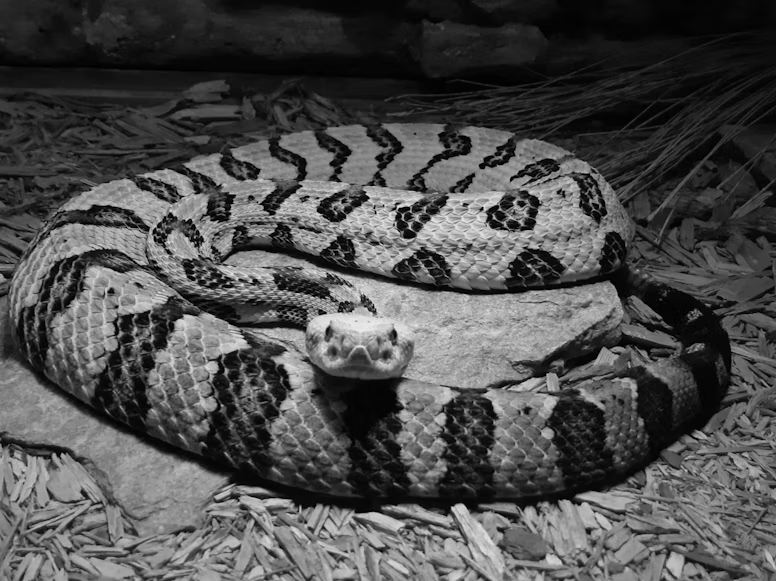
Most snake experts, when asked to name the world’s most dangerous snake, point to either the black mamba or the coastal taipan, both combining lethal venom, aggressive behavior, and environments that put them in regular contact with humans.
What is certain is this: these animals command respect. Snakes have shaped human history, mythology, and medicine for thousands of years. They are not villains; they are predators, perfectly adapted to their environments. Understanding them is the first step toward coexisting with them safely.
Bonus: Snakebite Facts You Should Know
Snakes kill an estimated 100,000 people annually worldwide.
Africa and Asia account for the vast majority of snakebite fatalities.
Most snakebites happen when humans accidentally step on or provoke a snake.
Antivenom has saved millions of lives since its development in the late 19th century.
If bitten, keep calm, immobilize the affected limb, and seek medical help immediately.
Sources: Britannica / Rainforesttrust / Discover Wildlife / HowStuffWorks
Read also: Nature’s Best-Kept Secrets… 10 Strange Animals You Won’t Believe Exist